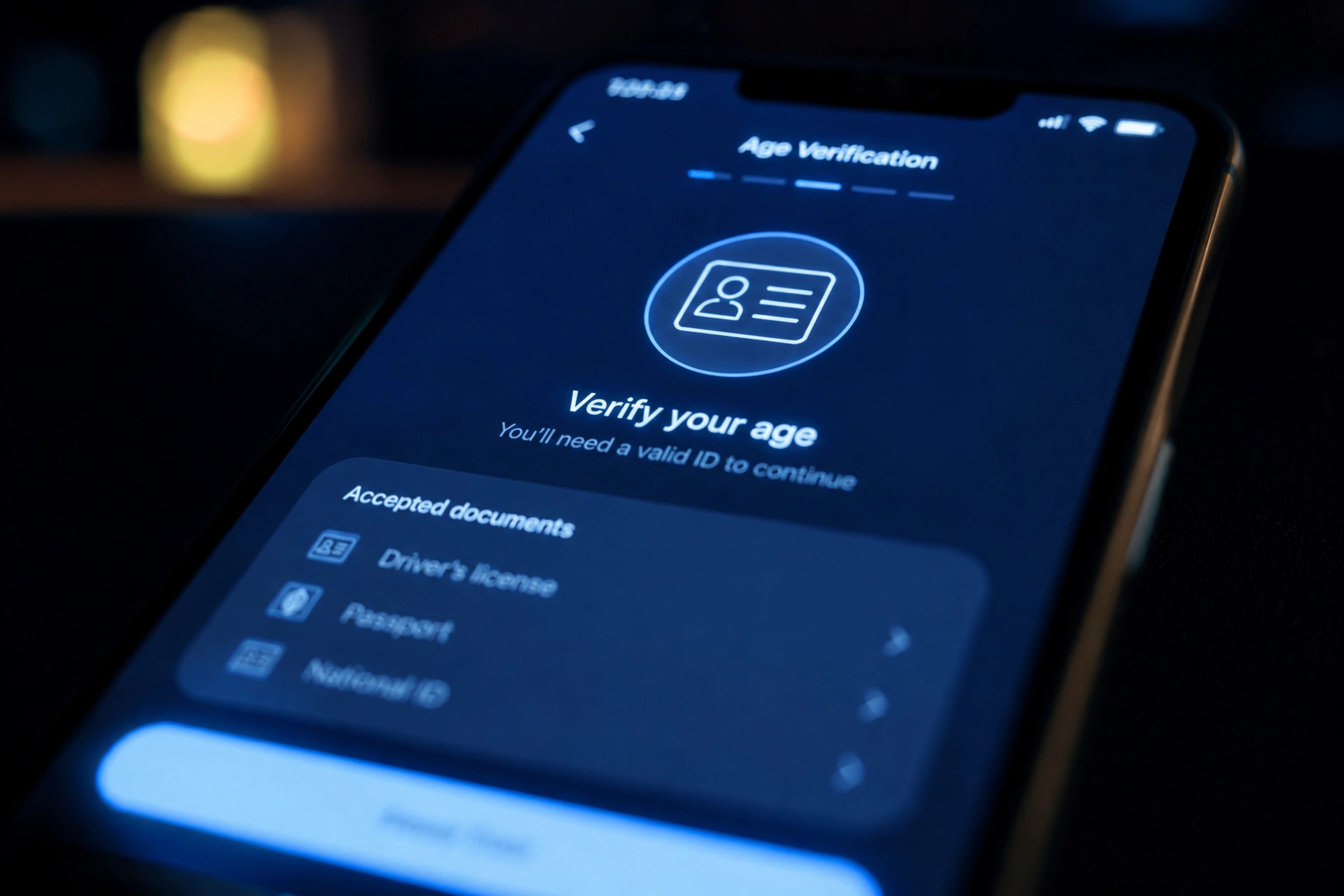

Ofcom has spent the first eight months of 2026 steadily escalating its enforcement campaign against adult websites that fail to meet the UK's new age-verification requirements, with fines now reaching into seven figures for repeat or serious non-compliance.
What the Law Actually Requires
Since 25 July 2025, the Online Safety Act has required any site hosting pornographic content to deploy what Ofcom calls ‘highly effective’ age assurance before showing that content to a UK visitor. Self-declared age, or simply requiring a credit card, no longer satisfies the regulator — acceptable methods now include photo-ID checks, facial age estimation, or confirmation through a bank or mobile provider. Non-compliance carries fines of up to £18 million or 10% of global turnover, whichever is larger, and Ofcom can order UK internet providers to block access to a site outright.
The Fines Have Been Climbing
Enforcement began within days of the deadline, and by February 2026 Ofcom had opened more than 90 investigations. AVS Group was fined roughly £1 million in December 2025 for running 18 adult sites without adequate checks, plus a further penalty for failing to respond to the regulator's information requests. Kick Online Entertainment followed in February 2026 with an £800,000 penalty covering 34 sites. Later that same month, 8579 LLC — the operator behind justpornflix.com — received the largest fine yet at £1.35 million, again with an additional penalty layered on for non-cooperation.
The Compliance Picture Is Actually Shifting
Ofcom's own March 2026 bulletin reports real movement: of the top 100 dedicated pornography services by traffic, 77 now have age-assurance measures in place, and a further 7 have chosen to block UK users entirely rather than comply. That's a meaningful shift in under a year, though it's come with side effects — VPN providers reported UK sign-up spikes in the thousands of percent in the days after enforcement began, as users looked for ways around the checks.
Why This Matters Beyond Pornography Sites
The scope of ‘pornographic content’ under the Act is broader than dedicated adult-content platforms; Ofcom's enforcement has already extended to social media, dating platforms, and even AI chatbot services where sexual content can appear. For any UK-facing platform in the broader adult-entertainment space, the direction of travel is clear: age-assurance obligations are being enforced with real financial teeth, not treated as a paperwork exercise, and the list of prioritised targets is still growing.
Frequently Asked Questions
What counts as ‘highly effective’ age assurance under the Online Safety Act?
Ofcom has rejected self-declaration and payment-card-only checks. Accepted methods include photo-ID verification, facial age estimation, and confirmation through a bank or mobile network operator.
How large are the fines so far?
The largest to date is £1.35 million, issued to 8579 LLC in February 2026, with earlier fines of roughly £1 million and £800,000 against other operators.
Does this only apply to dedicated porn sites?
No — Ofcom's enforcement has extended to social media, dating apps, and AI services where sexual content can appear, not just sites built around pornography.
The Bottom Line
Age verification in the UK has moved from a legal requirement on paper to an actively and expensively enforced regime, and the compliance numbers back that up — most major adult sites have adapted rather than risk the fines. Browse verified independent providers across England on TrystHub.

Aug 31, 2026
“VIP rate” shows up on plenty of escort profiles, but there's no industry standard defining what it actually means. Here's what usually drives a higher VIP rate, why the term stays vague on purpose, and how to actually evaluate one before booking.
James Whitaker 5 min Reading time “VIP rate” shows up on enough profiles that clients searching for pricing information run into it constantly, usually without much explanation of what actually separates a VIP rate from a standard one. The short answer: there's no industry standard defining it, which makes it worth understanding case by case rather than assuming it means the same thing everywhere.
There's No Universal Definition
Unlike a legally defined term, “VIP” in an escort profile is entirely up to the individual provider. Some use it to mark a premium tier with genuinely different inclusions; others use it simply to describe their standard rate in more appealing language. Neither is dishonest — it's just unregulated terminology, which means the label alone tells you less than the actual details listed underneath it.
What Usually Drives a Higher Rate
When a VIP rate does reflect something substantively different, it tends to come down to a handful of recurring factors: longer minimum booking durations, additional availability or flexibility around scheduling, a more curated or exclusive client-selection process, and sometimes added extras like a dinner date component or overnight availability. None of these are universal — they vary entirely by provider — which is exactly why the label needs unpacking rather than taken at face value.
How to Actually Evaluate One
The reliable approach is the same one that applies to any rate on any profile: read what's actually included, and ask directly if it isn't clear. A straightforward message asking what distinguishes the VIP rate from the standard one is a completely normal question, not an awkward one, and any provider using the term deliberately will have a ready answer. Our US pricing guide breaks down what rates actually look like city by city, which is a more reliable reference point than any single label on a profile.
Why the Term Persists Despite Being Vague
Its imprecision is part of why it's stuck around — “VIP” signals exclusivity and quality without requiring a provider to define exactly what that means, which gives her flexibility in how she markets a premium tier. That's not a red flag by itself, but it does mean the term is more of a marketing signal than a specification, similar to how GFE and PSE describe tone rather than a fixed menu — useful shorthand, not a contract.
Frequently Asked Questions
Is a VIP rate always more expensive than a standard rate?
Usually, yes, but the size of the difference and what it actually includes varies entirely by provider — there's no fixed formula.
What should I ask before booking at a VIP rate?
Ask directly what's included beyond the standard rate — duration, availability, extras — rather than assuming based on the label alone.
Does every provider use VIP rates the same way?
No. Some use it for a genuinely different tier of service; others simply use it as marketing language for their regular rate. Reading the specifics matters more than the label.
The Bottom Line
“VIP escort rate” isn't a standardized term, so it's worth treating as a starting point for a question rather than a fixed specification. Ask what it actually includes, compare it against typical rates in our pricing guide, and browse verified providers across the US on TrystHub to see how rates and tiers actually compare in practice.