 James Whitaker
Clients looking into the German market keep running into two words, ‘registered’ and ‘verified’, used as if they mean the same thing. They don't. They describe two completely separate systems with different purposes. The difference matters, because if you assume one covers what the other does, you can end up feeling safe for the wrong reasons.
What ProstSchG Registration Actually Confirms
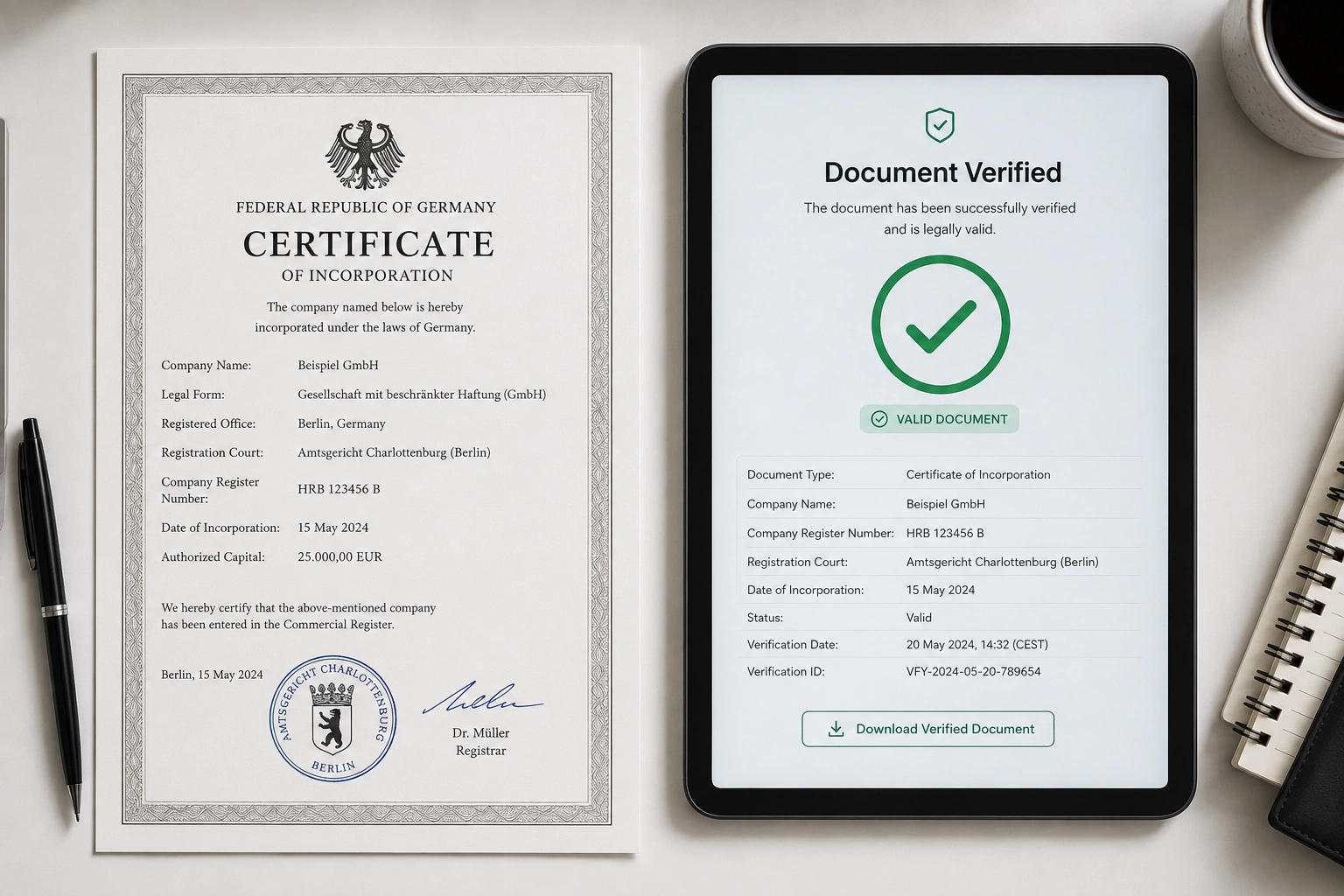
Under ProstSchG, anyone providing sexual services commercially in Germany must register with the local authority in the city where they mainly work. Registration includes an identity check by the authority and a mandatory health counseling session. At the end you get an Anmeldebescheinigung, a certificate the provider is legally required to carry while working. It's a real legal process, but what it confirms is narrow: this person has completed a government compliance step for working legally in Germany. It doesn't check that her advertised photos are current. It doesn't check her history with other clients. And it isn't a background check in the way most people use that phrase.
The Anmeldebescheinigung Isn't a Client-Facing Document
To put it plainly: the registration certificate is for dealings between the provider and the authorities, like police checks and health inspections. It's not an ID you should expect to see on a date. Asking to see it isn't a normal part of booking. Demanding it has nothing to do with your safety and a lot to do with invading someone's privacy for no reason. If verification matters to you, use the tools made for that, which are on the directory side. Not government paperwork that was designed for a completely different job.
What Directory Verification Actually Does
Verification on a platform like TrystHub is a whole different system, made for the client's trust problem. It checks that the person in the photos is the person who'll show up, and profiles that pass get an ID-verified badge. Over time genuine reviews build a track record. That's the part that actually answers what most clients mean when they ask if a profile is real. ProstSchG registration and directory verification solve different problems. One is about legal compliance with the German state. The other is about accuracy and accountability toward you as a client. Neither replaces the other.
Why the Two Get Confused
The confusion makes sense. Germany is known for regulating the industry (a framework that actually varies less by city than people assume), and that gives the impression that "legal" and "checked for you personally" are the same. They aren't. A fully legal, properly registered provider can still have an old photo or a messy profile. And an unregistered provider working outside the ProstSchG system (that does happen, and it has its own risks) could still have accurate, verified photos on a directory. The two systems run completely separately.
What Actually Protects You as a Client
Real safety comes from a few things together. Profiles with an ID-verified badge and genuine review histories. A direct conversation before booking to confirm details and set expectations. Sensible logistics once you meet. Our hotel etiquette guide and client etiquette guide cover both in detail. None of this needs government registration paperwork, and asking for it doesn't help. That document works on a completely different level. It protects the provider's legal standing and payment rights, it doesn't screen her for you.
Frequently Asked Questions
Can I ask to see a provider's ProstSchG registration?
It's not a normal part of booking and it isn't meant as a check for clients. The certificate is for dealing with authorities, not clients. Directory verification and reviews are the tools actually made for your side.
Does being registered under ProstSchG mean a provider's photos are accurate?
No. Registration confirms a legal compliance step, not that photos or profile details are current. That's what platform verification and reviews are for.
Is an unregistered provider automatically less trustworthy?
Not necessarily when it comes to profile accuracy, though working outside ProstSchG is a separate legal risk for her. Legal registration and directory accuracy really are two independent questions.
What's the actual difference between being verified and being registered?
Registered means she has completed Germany's legal compliance process to work. Verified means a directory has confirmed that her photos and identity match the person who shows up. They answer completely different questions.
The Bottom Line
ProstSchG registration and directory verification aren't competing systems. They're two tools for two different problems. Mixing them up leads either to false confidence or to invasive requests that don't make anyone safer. If you care about accuracy and accountability, look for the ID-verified badge and real reviews. Browse independent providers across Germany on TrystHub.